LTE Router for Vehicles
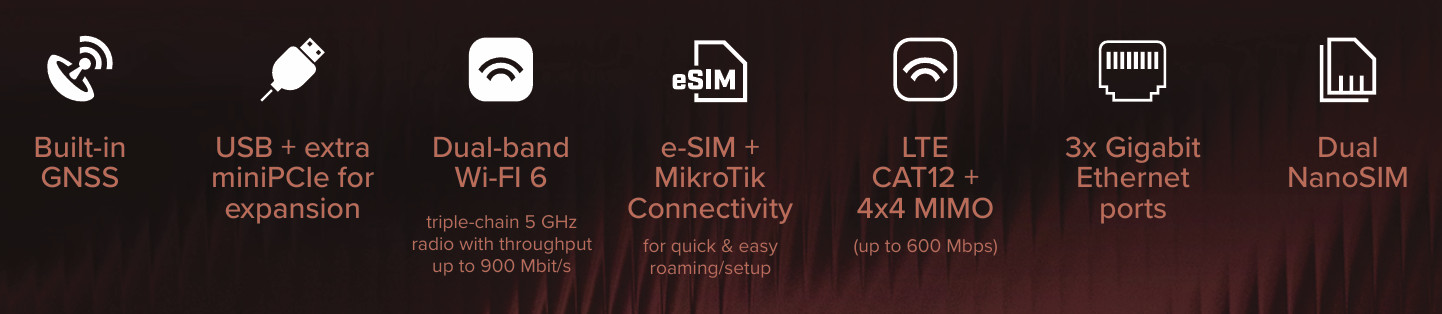
The MikroTik LtAP LTE12 ax is a rugged cellular router designed to provide network connectivity in vehicles, transport systems, and remote industrial installations. It combines LTE Category 12 connectivity, dual-band Wi-Fi 6, built-in GNSS, and RouterOS v7 in a single device. The integrated LTE modem supports 4×4 MIMO for downlink communication, with download speeds of up to 600 Mbps and upload speeds of up to 150 Mbps. This allows the router to establish a mobile broadband connection while distributing network access to connected equipment. Its combination of cellular and local networking functions is particularly relevant for installations where a fixed Ethernet connection is not available.
The LtAP LTE12 ax offers several ways to manage mobile network access, including two Nano SIM slots and built-in eSIM support. MikroTik Connectivity further simplifies cellular setup by allowing users to sign in to their MikroTik account, register the router, and select a data plan. This provides an alternative to arranging a separate operator contract before deployment. The combination of physical SIM cards and eSIM is especially useful for equipment that operates across different regions or national borders, where mobile operators and connectivity requirements may change. Users can select the operator and data plan appropriate for their installation without relying exclusively on physical SIM card replacement.
Wi-Fi and Network Management
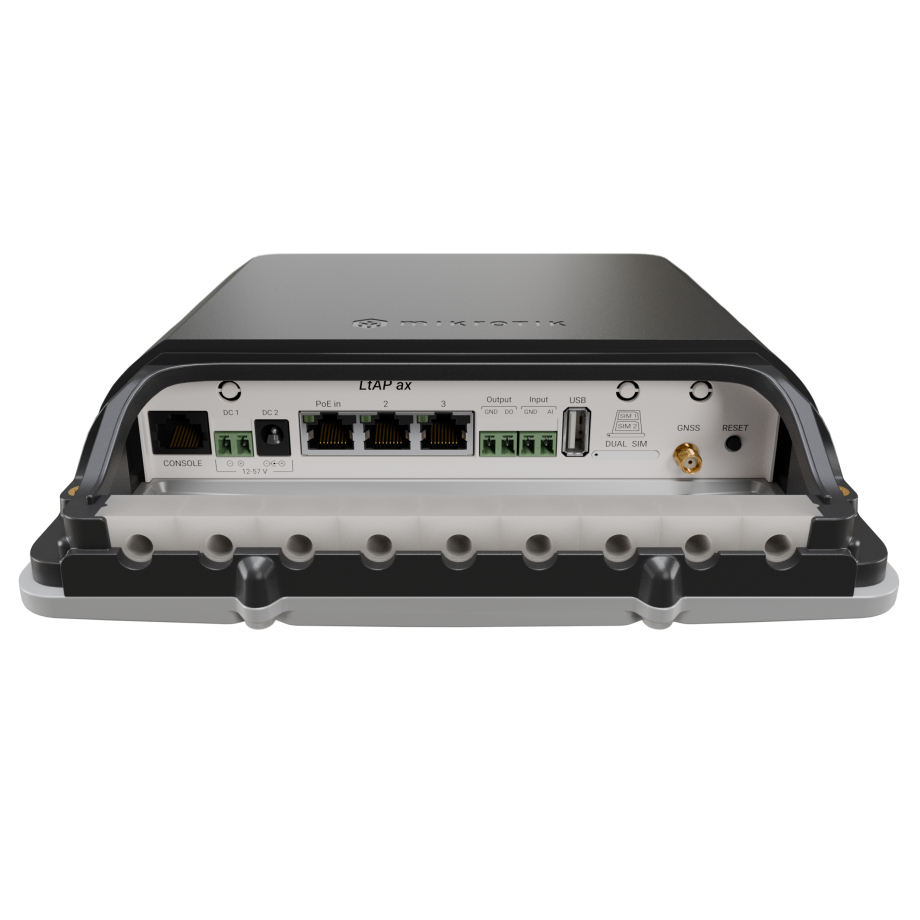
The LtAP LTE12 ax provides local connectivity through dual-band Wi-Fi 6 and three Gigabit Ethernet ports, allowing wireless and wired devices to share the router's network connection. Its wireless system operates on the 2.4 GHz and 5 GHz frequency bands, with a triple-chain 5 GHz radio delivering throughput of up to 900 Mbit/s. This combination can accommodate different types of connected equipment, including onboard cameras, ticketing terminals, tablets, and tracking systems. Devices requiring a physical network connection can use the Gigabit Ethernet interfaces, while Wi-Fi provides access for compatible wireless clients. Integrated GNSS functionality supports GPS, GLONASS, Galileo, BeiDou, and QZSS, adding positioning capabilities for fleet tracking and monitoring solutions.
Network configuration and administration are handled through MikroTik RouterOS v7 with a Level 4 license. The operating system provides advanced routing functions, VPN connectivity, firewall rules, and remote administration, giving users control over how network traffic is managed. The router also includes a miniPCIe expansion slot that can accommodate a compatible second cellular modem. When this additional modem is installed, RouterOS can be configured to provide failover between cellular connections. This arrangement separates the primary connection from a secondary connection that can be used when needed. Together with the built-in LTE modem, Wi-Fi interfaces, and Ethernet ports, these capabilities allow the LtAP LTE12 ax to serve as a central networking device for vehicle-based and remote installations.
Rugged Design and Mounting
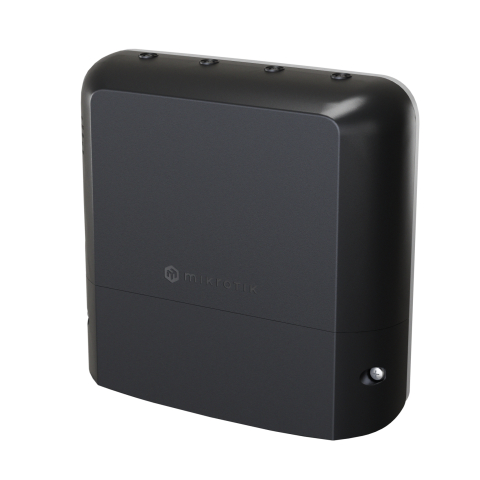
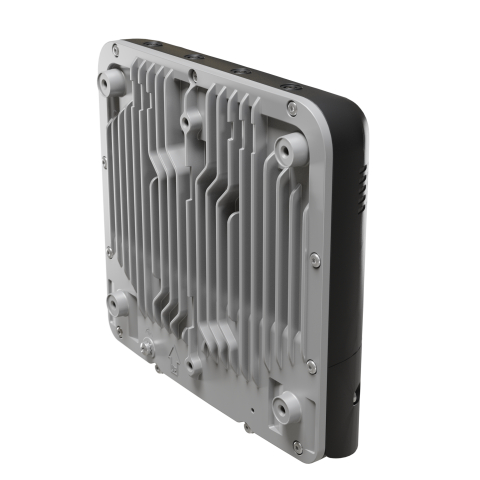
The LtAP LTE12 ax features an IP66-rated enclosure designed for demanding outdoor, automotive, and industrial environments. Its construction protects the device against dust and powerful water jets, while the specified operating temperature range extends from -40°C to +70°C. The router is also E-mark certified, reflecting its automotive-oriented design. Installation options include wall mounting and attachment to horizontal or vertical poles, enabling the enclosure to be positioned according to the available mounting surface. Dedicated drilling locations allow SMA connectors to be added when external antennas are required. These mounting and antenna provisions are particularly relevant for installations in which equipment placement and access to external connections need to be planned together.
Three power input options accommodate different installation arrangements: a DC jack accepting 12–57 V, an 802.3af/at PoE input accepting 18–57 V, and a 2-pin terminal accepting 12–57 V. The router also incorporates an analog input and a digital output, extending its functionality to monitoring and automation tasks. External sensors can be connected to monitor voltage signals, while RouterOS scripting can automate responses based on those inputs. For example, the device can be configured to monitor equipment temperature and activate a cooling fan through an external relay. This allows the router to combine network connectivity with basic equipment monitoring and control functions, making it useful in installations where communication and automated responses are managed from the same device.
Technical Specs / Datasheet





Reviews and ratings
Product rating